

Pregnancy doesn’t mean you have to stop exercising your legs.
In fact, maintaining leg strength can be beneficial during pregnancy and postpartum recovery.
Here are 9 safe and effective leg exercises for pregnant women:
| Squat | Works quadriceps, adductors and glutes |
| Modified Step Ups | Targets quadriceps, adductors, and glutes |
| Reverse Lunges | Engages quadriceps, adductors, and glutes |
| Modified Lateral Lunges | Works quadriceps, adductors, and hamstrings |
| Side-Lying Abductor Raise | Targets outer thighs and glutes |
| Side-Lying Clams | Focuses on hip external rotators |
| Sumo Squats | Emphasizes inner thighs and hips |
| Hip Hinges | Works hamstrings and glutes |
| Donkey Kick Backs | Targets glutes and hamstrings |
Bonus exercises:
- Calf Raises – Strengthens lower leg muscles
- Side-Lying Adductor Raise – Targets inner thighs

Safety Considerations for leg exercises during pregnancy
Before diving into the exercises, let’s quickly cover some important safety guidelines:
- Always consult your doctor before starting or continuing any exercise routine during pregnancy.
- The American College of Obstetricians and Gynecologists recommends regular exercise throughout pregnancy for most women.
- Avoid exercises that require lying flat on your back after the second trimester.
- Be cautious with exercises that demand significant balance.
- Avoid high-impact exercises involving jumping (box jumps, burpees, plyometric exercises)
- Stop immediately if you experience pain, dizziness, or discomfort.
- Modify exercises as needed, such as:
- Glute bridges
- Single-leg exercises like lunges and step-ups
- Listen to your body and adjust intensity as needed throughout your pregnancy.
Now that we’ve covered the safety considerations, let’s explore the 9 best leg exercises you can safely perform during pregnancy.
The Best Leg Exercises For Pregnancy
Below are the top 9 pregnancy exercises you can do for your legs.
Also, you can increase the difficulty of any of the leg exercises by adding resistance bands.
You can get a pair of The Postpartum Trainer’s Hip Resistance Bands here.
Let’s start.
The Squat
The number one leg exercise for pregnant women is the squat. This movement trains the muscles in the front of your legs (the quadriceps), your inner thighs (the adductors), and your booty (the glutes).
Here is what it looks like.
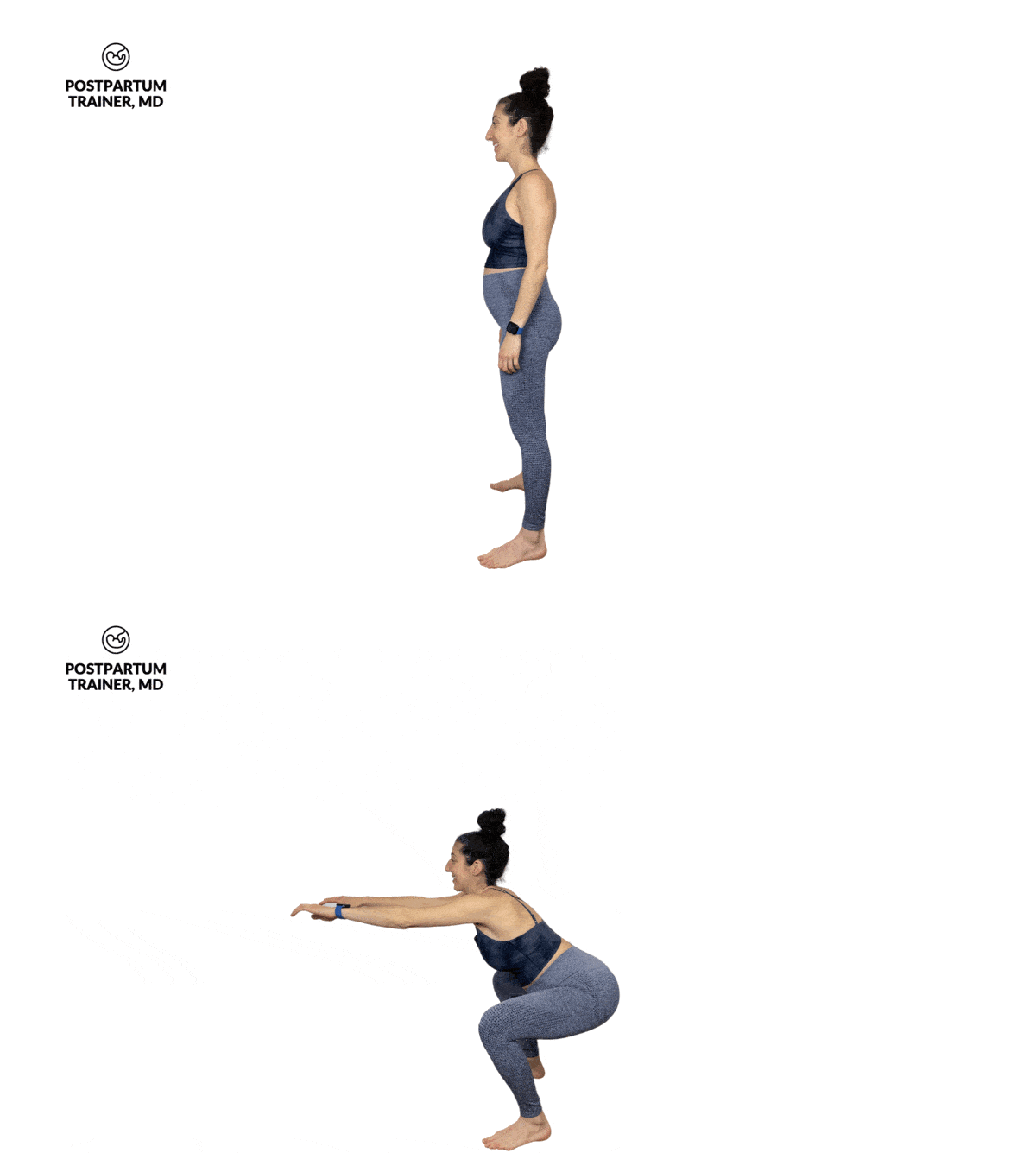
Stand with your feet shoulder-width apart and toes pointing out.
Bend at the hips and knees and go as low as you comfortably can.
Do your best to keep your heels flat on the floor and your back flat.
Don’t be afraid to use the back of a sturdy chair for support.
This will help you to only go as low as you comfortably can.
Form Cue: Keep your chest up and core engaged throughout the movement.
Common mistake: Letting knees cave inward; focus on pushing knees outward in line with toes.
Do 10-12 repetitions per set.
Modified Step Ups
The modified step up is the first single-leg exercise we will go over.
This exercise will work out the muscles in the front of your thighs (quadriceps) your inner thighs (adductors), and your glutes.
Remember when I said that you should avoid exercises that require a lot of balance? One simple way to modify the step-up is to just use a shorter platform.
Here’s what the exercise looks like.
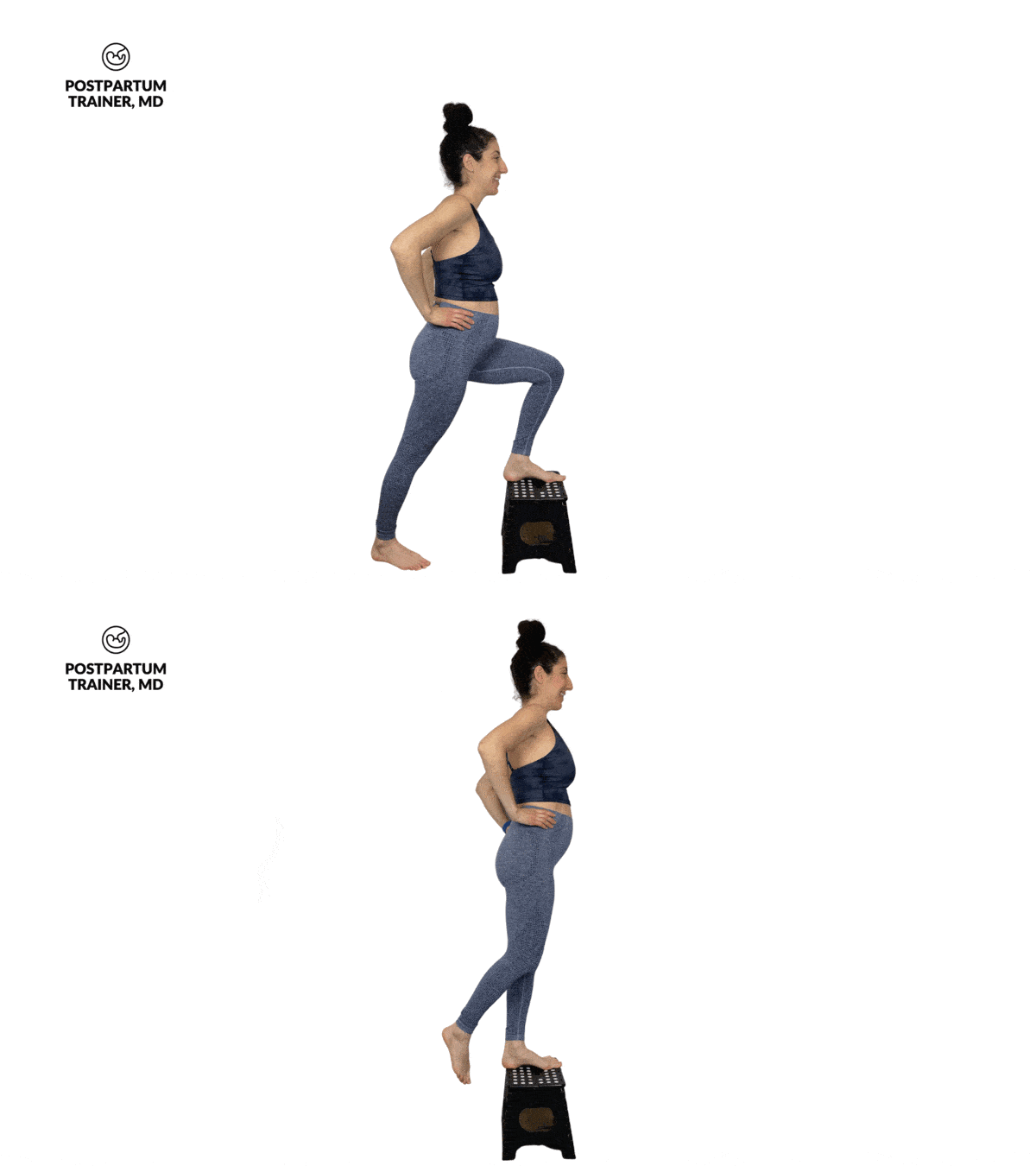
Make sure to keep your hips level, and your knees pointing forward throughout the exercise. (Don’t let your knees track inward).
Also, when training your left foot, try not to push too much with the right foot and vice versa.
In the beginning, feel free to use the back of a chair for balance.
Form Cue: Drive through your heel as you step up, engaging your glutes.
Common mistake: Pushing off with the back foot instead of using the stepping leg.
Do 12 repetitions on each leg.
Reverse Lunges
Reverse lunges are another great single-leg exercise that you can do safely in pregnancy.
This exercise will work out the muscles in the front of your thighs (quadriceps), your inner thighs (adductors), and your glutes.
Here is what the exercise looks like:
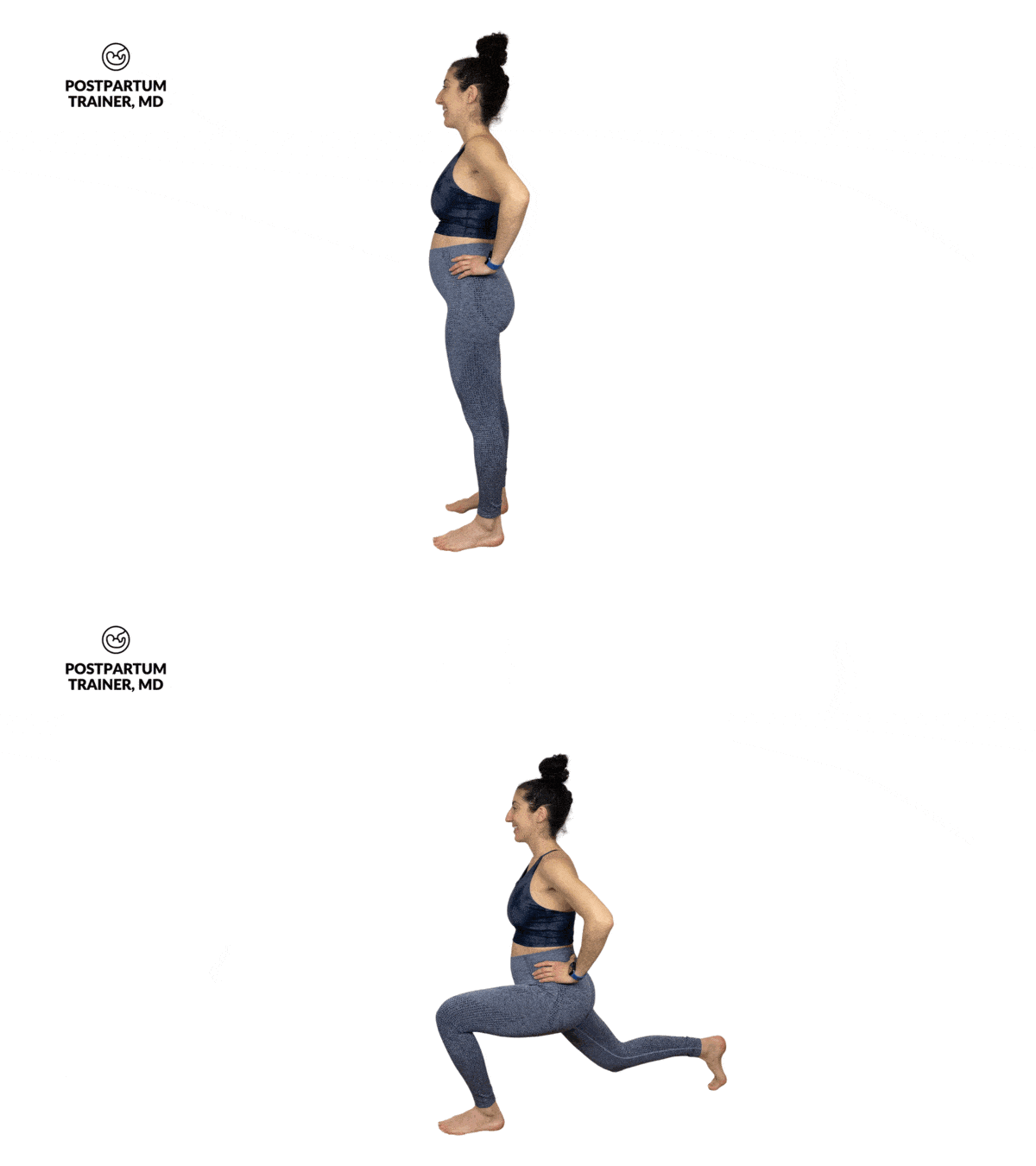
I like to keep my hands at my hips or down at my side to help me keep a neutral pelvis as I step back.
Your back knee does not have to touch the floor.
Feel free to use a chair in the beginning, to help keep your balance.
Form cue: Keep your front shin vertical, with your knee directly over your ankle.
Common mistake: Leaning forward too much; maintain an upright torso.
Do 12 repetitions on each leg.
Modified Lateral Lunges
The lateral lunge is the last, single-leg exercise we will do.
This exercise will work out the muscles in the front of your thighs (quadriceps), your inner thighs (adductors), and your hamstrings which are on the back of your thighs.
The starting position requires a wide stance with your feet pointing out.
I recommend you always use a chair for this exercise to help you keep your balance.
Here is what the exercise looks like:
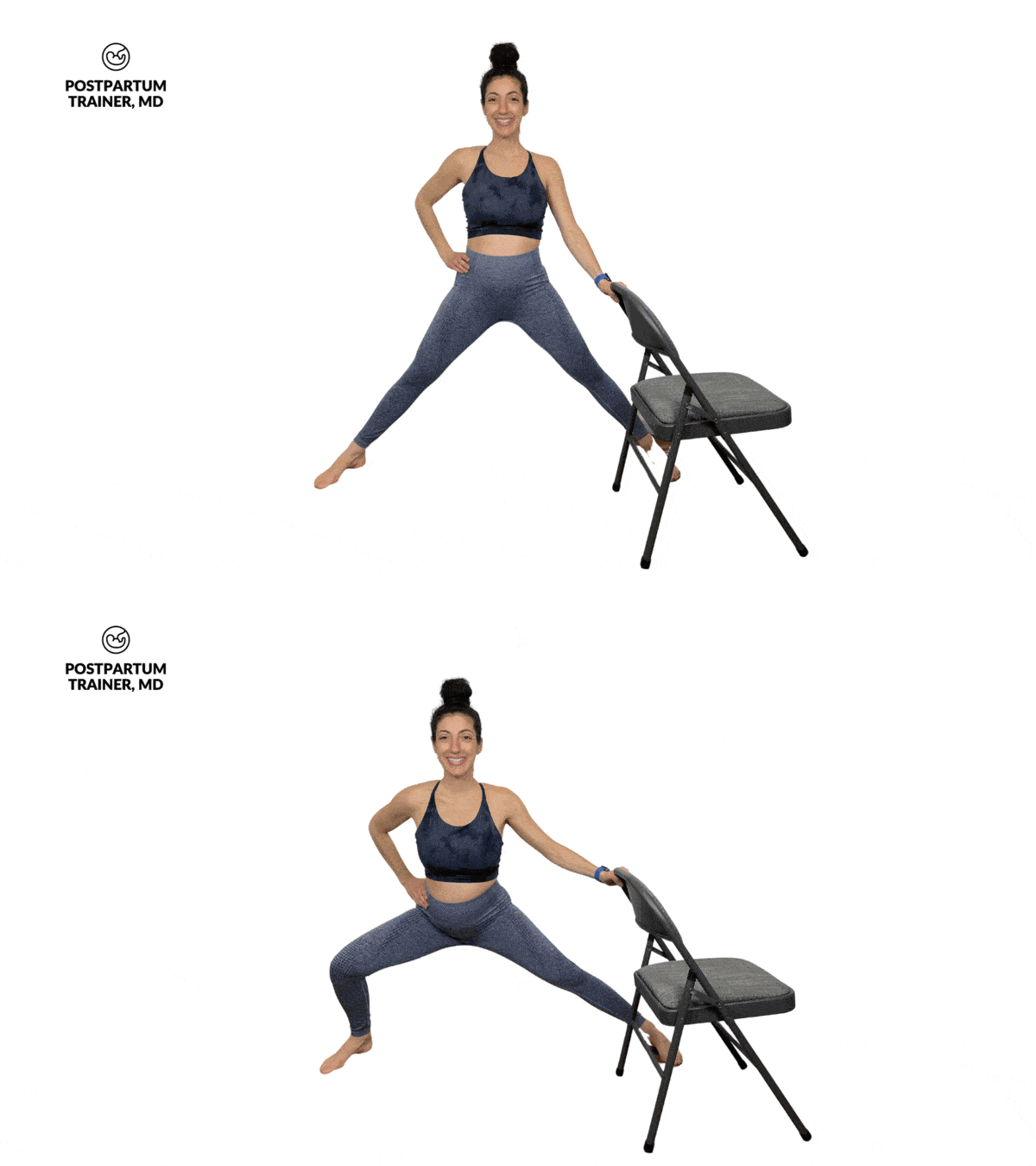
Keep your heels flat on the floor and the non-working leg straight.
Only go as low as you comfortably can.
Form cue: Push your hips back as you lunge to the side, keeping your back straight.
- Common mistake: Bending forward at the waist instead of hinging at the hips.
Do 10-12 repetitions on each leg.
Side-Lying Abductor Raise
The side-lying abductor raise (aka leg lifts) is a simple leg exercise you can do when sitting on the couch or lying in bed.
This exercise will train the abductors of your legs, which are on the outer side of your thighs and glutes.
Here’s what the exercise looks like:
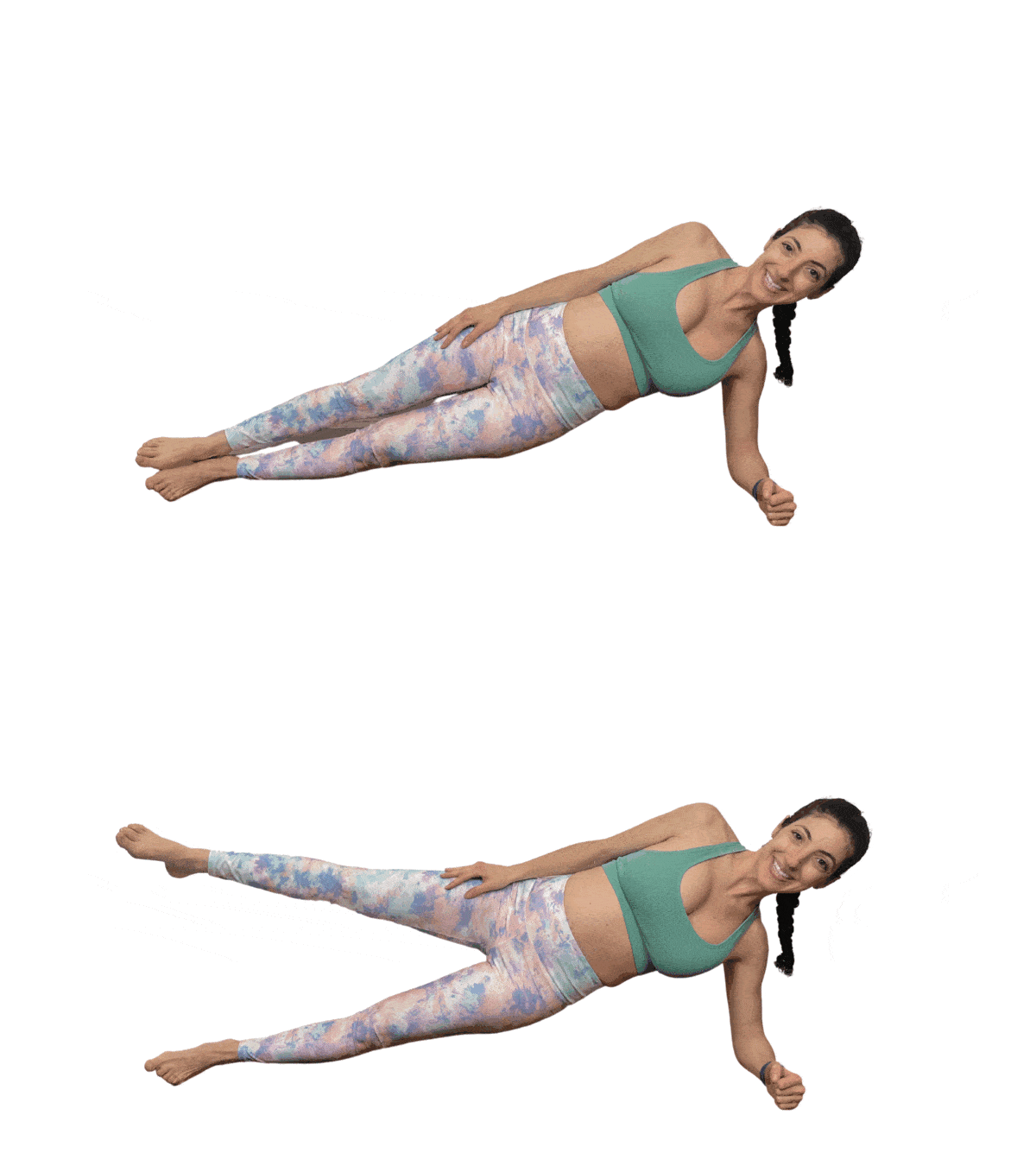
Make sure to train the left leg and right leg evenly.
Form cue: Keep your hips stacked vertically throughout the movement.
Common mistake: Rotating the top hip backward as you lift the leg.
Do 12-15 repetitions per leg.
Side-Lying Clams
Right after the side-lying leg raise, you can go straight to the side-lying clam.
This exercise will work out the external rotators of your hips- such as the medial glutes.
Here is what the exercise looks like:
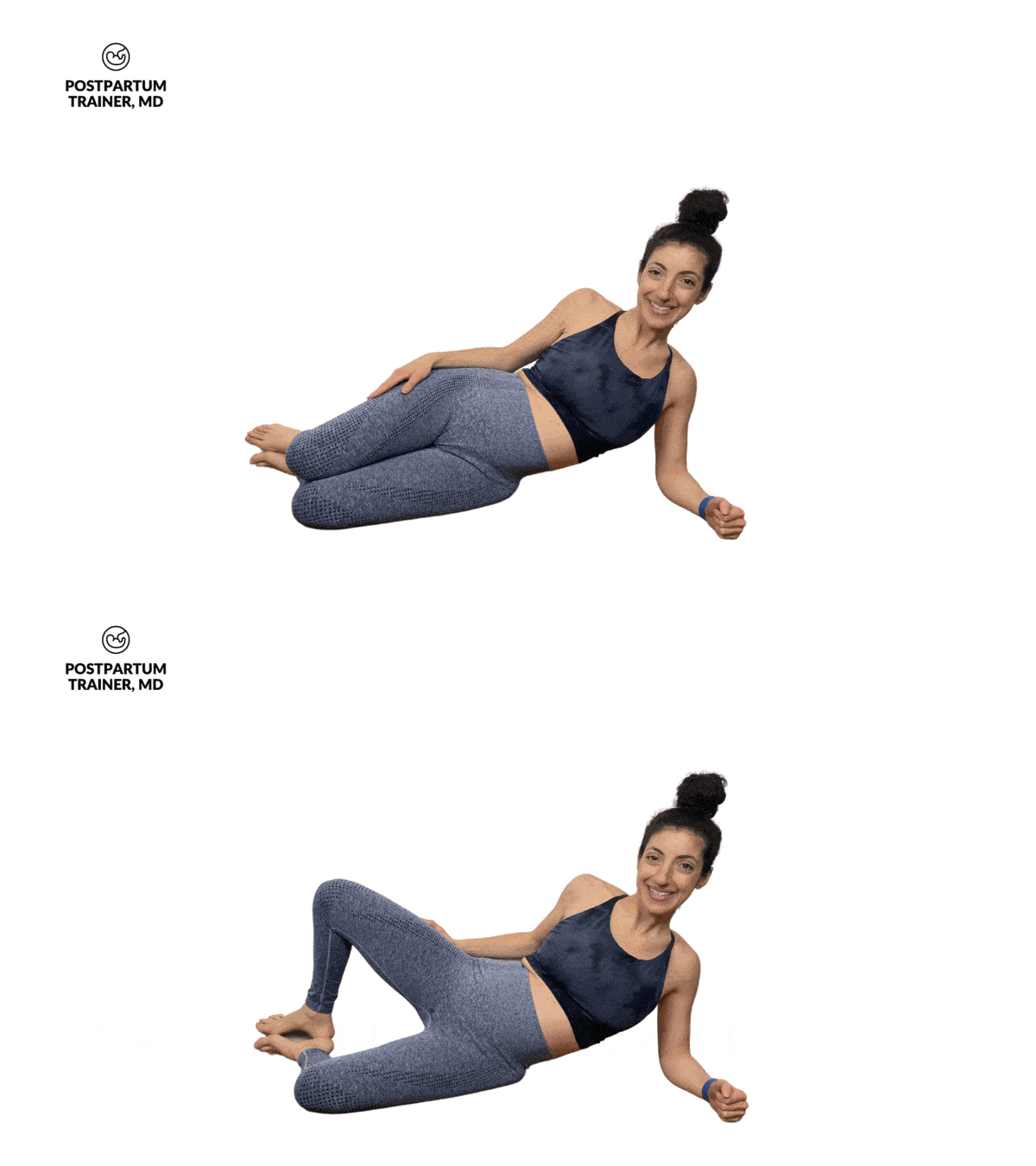
Lie on your left side with your knees together and feet together.
From here, rotate your right knee away from your left knee while keeping your heels together.
Form cue: Keep your feet together and rotate only at the hip.
Common mistake: Lifting the top hip as you open the knee; keep the hips stable.
Do 12-15 repetitions per side.
Sumo Squats
The sumo squat is another squat variation that emphasizes the muscles of your hips and inner thighs.
It will work out your quads, your adductors and your hip flexors.
Here is what the exercise looks like:
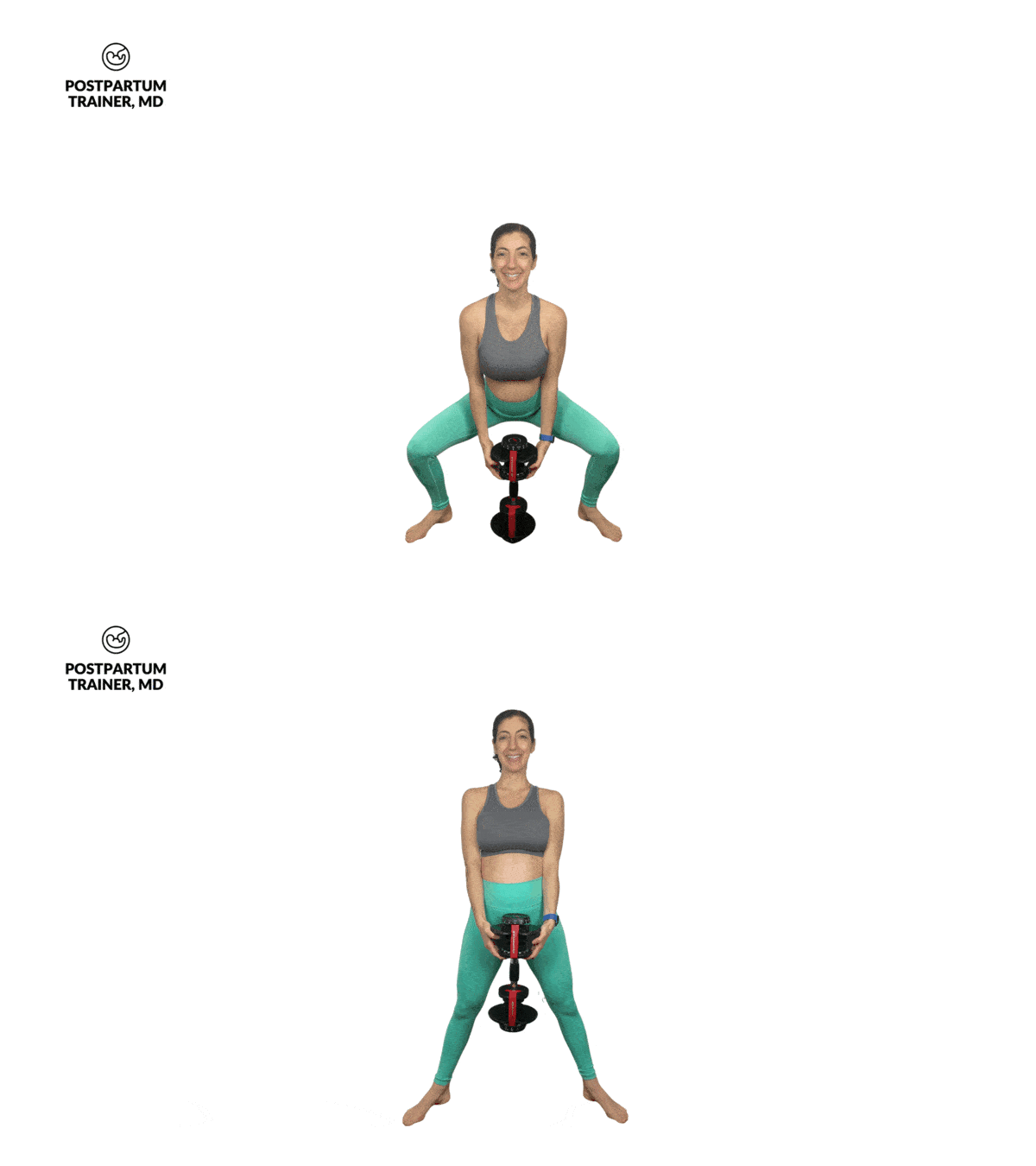
Start with your feet as far apart as comfortably possible.
Turn your toes out to the side.
Squat down using a chair for support until you feel stretching in your groin.
Come back up by squeezing your booty muscles.
Make sure to keep your heels flat on the ground at all times.
Form cue: Push your knees out in line with your toes as you squat down.
Common mistake: Letting the knees collapse inward; focus on maintaining a wide stance.
Do 12 repetitions per set.
Hip Hinges
The hip hinge is a great exercise you can do in pregnancy to work out your hamstrings (the back of your thighs) and your glutes (the booty).
Here is what the exercise looks like:
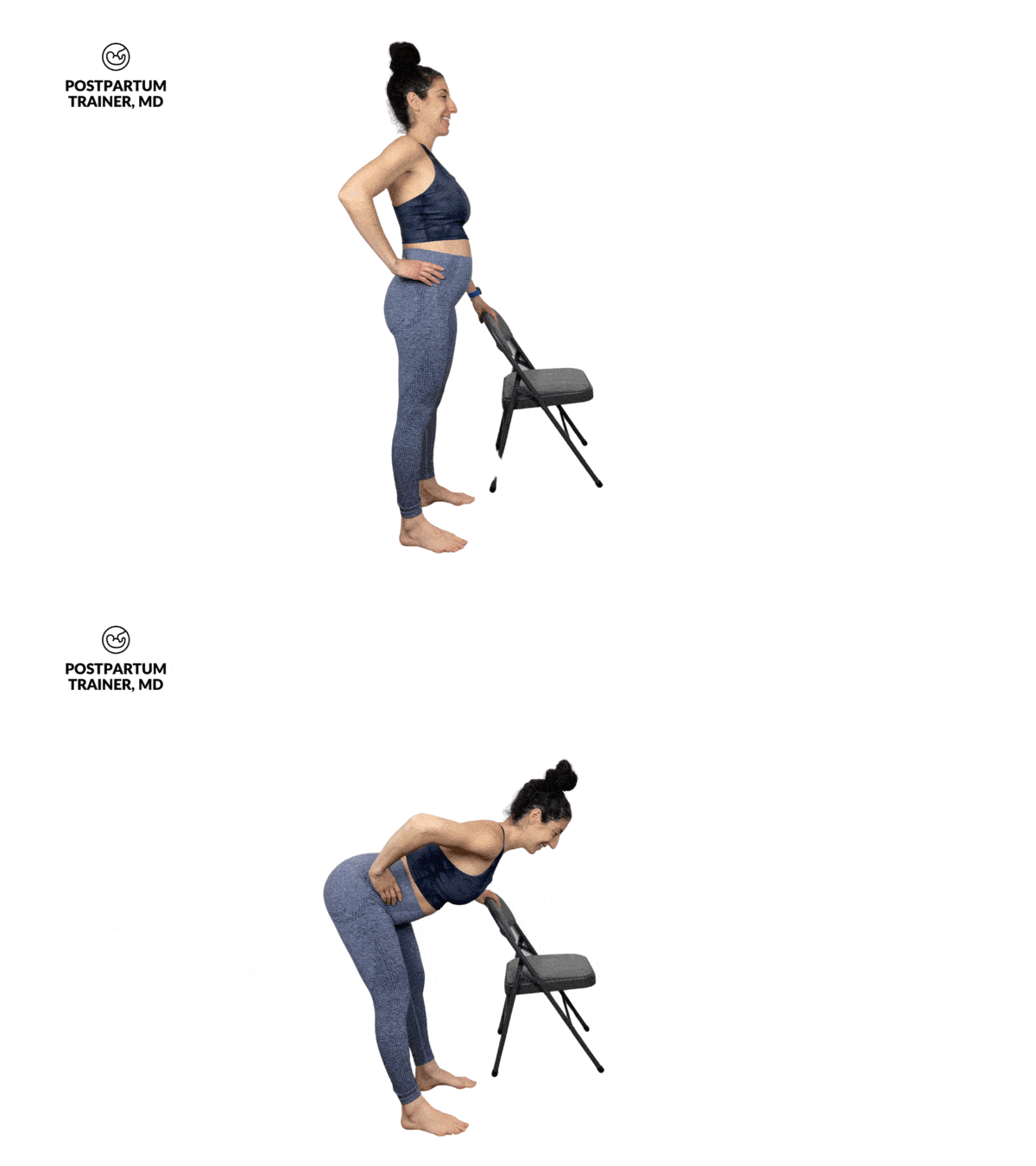
It is important that you start the exercise by pushing your butt back first while keeping your spine neutral.
At the end range, you should feel your hamstrings stretching.
You can have a slight bend at the knee.
Feel free to use the back of a chair for support.
If this exercise places too much pressure on your belly, then don’t do it.
Form cue: Maintain a slight bend in your knees and a flat back throughout the movement.
Common mistake: Rounding the back; focus on hinging at the hips, not bending the spine.
Do 12 repetitions per set.
Donkey Kick Backs
The donkey kickback is another popular booty and hamstring exercise that is safe in pregnancy.
Here is what the exercise looks like:
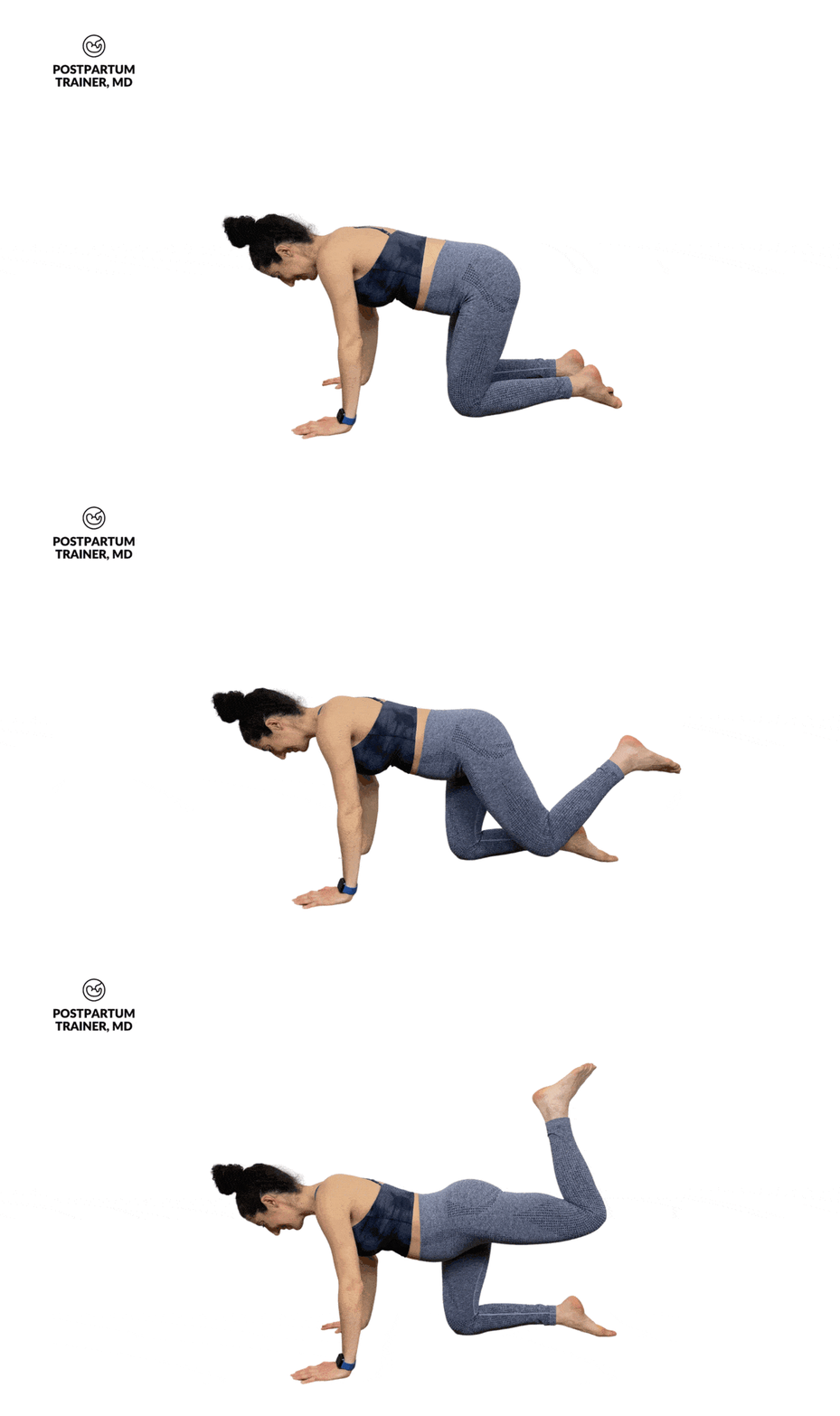
Kneel down and get on all fours. Keep your back flat and kick one leg up toward the sky.
Do your best to keep your back flat. Don’t arch your low back, as this can worsen low back pain. I have written an entire post on back pain after pregnancy.
Another variation is to simply kick your leg back straight while squeezing your glute muscle.(Related Post: 7 Awesome Butt Exercises You Can Do In Pregnancy)
Form cue: Keep your core engaged and back flat as you lift your leg.
Common mistake: Arching the lower back; focus on stability through your trunk.
Do 12 repetitions per leg.
Bonus Exercise #1: Calf Raises
The calf raise is a bonus exercise that can safely be performed in pregnancy.
This exercise will work out the muscles of your lower leg- gastrocnemius, tibialis posterior, and soleus.
Here is what it should look like:
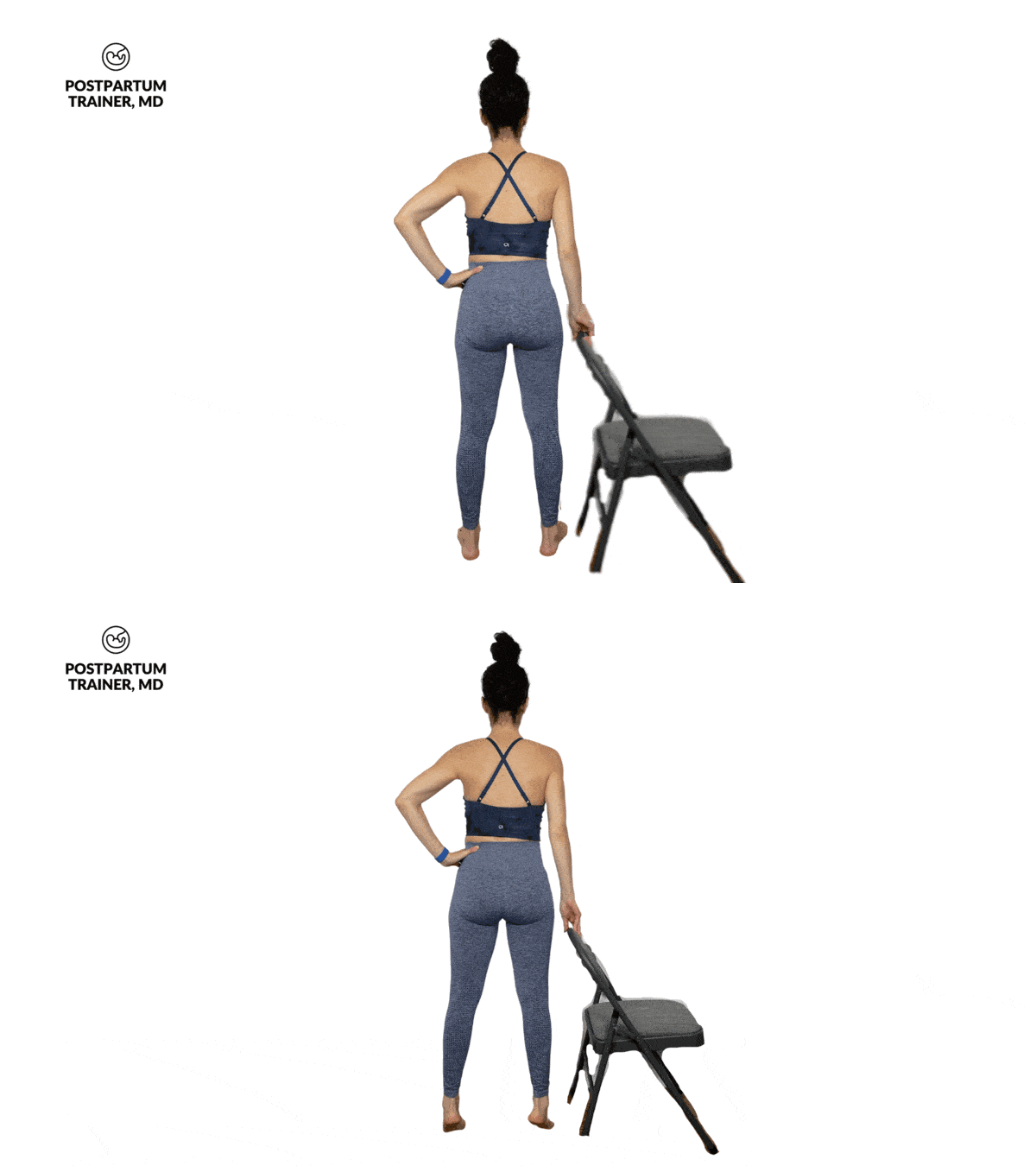
Use the back of a chair to help keep your balance.
The exercise is even better if you do it on a platform where your heels can go lower than the front of your toes.
Hold the top position for at least 1 second before coming back down.
Be sure to come down as slowly as you can.
Do 20 repetitions per set.
Bonus Exercise #2: Side-Lying Adductor Raise
The next bonus exercise is the side-lying adductor raise.
It’s similar to the leg lift you did earlier but instead of lifting the top leg, you will lift the bottom leg.
This exercise will work out the muscles of your inner thigh- the adductors.
Here is what it should look like:
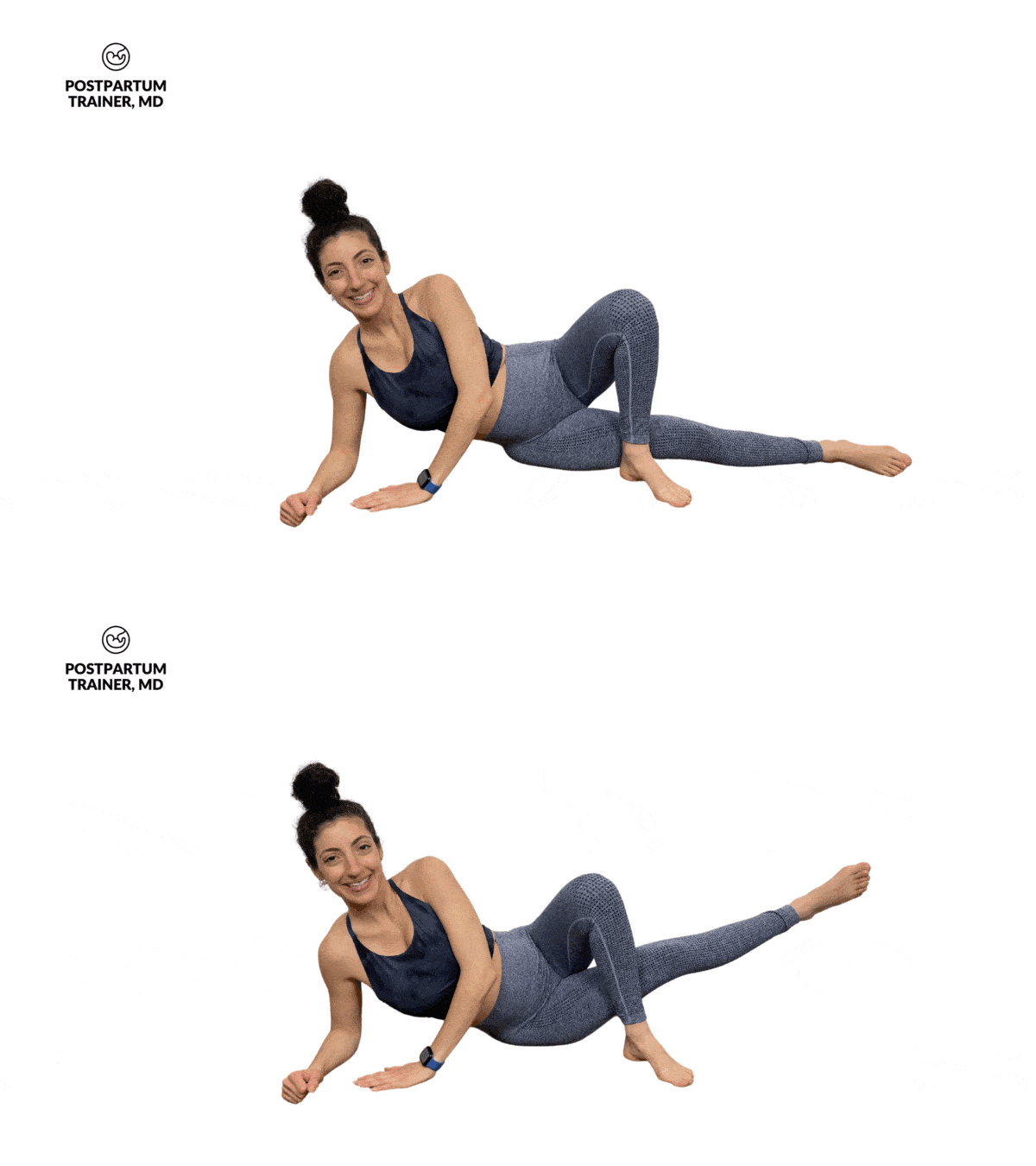
To do this, place your top leg in front of the bottom leg with your knee bent.
Do 8-10 repetitions per leg.
Okay, so there you have it.
To make it easy for you, I will also list the exercises based on which leg muscles they work.
Exercises For The Front Of Your Thigh (Quadriceps)
- Squats
- Step-Ups
- Reverse Lunges
Inner Thigh Exercises (Adductors)
- Side Lunge
- Sumo Squats
- Side-Lying Adductor Raises
Glute Exercises (& Hamstrings)
- Hip Hinges
- Donkey Kickbacks
- Reverse Lunge
A Simple Pregnancy Leg Workout
So here’s how to create an effective leg workout using these exercises:
Workout A
| Exercise | Sets | Reps |
| Squats (Chair Support) | 3 | 8-10 |
| Hip Hinge | 3 | 8-10 |
| Side Lying Adductor Raise | 3 | 12 per side |
| Calf Raise | 3 | 12-15 |
Workout B
| Exercise | Sets | Reps |
| Squats (Chair Support) | 3 | 6-8 per side |
| Side Lunge (Chair Support) | 3 | 8 per side |
| Donkey Kickbacks | 3 | 12 per side |
Workout Frequency, Progression, and Trimester-Specific Modifications
Frequency
- Aim for 2-3 leg workouts per week, allowing at least one day of rest between sessions.
- Combine these with other forms of exercise like walking or prenatal yoga for a well-rounded fitness routine.
Progression
- Start with 1-2 sets of each exercise and gradually increase to 3 sets as you build strength.
- Begin with bodyweight exercises and progress to adding light resistance bands or small weights.
- Increase repetitions gradually, starting with 8-10 and working up to 12-15 as you get stronger.
Trimester-Specific Modifications
First Trimester
- Most exercises can be performed as described, with little modification needed.
- Focus on establishing proper form and building a consistent routine.
Second Trimester
- As your belly grows, widen your stance slightly for exercises like squats and lunges.
- Use a chair or wall for balance support more frequently.
- Begin to avoid exercises lying flat on your back after 20 weeks.
Third Trimester
- Reduce the range of motion if you feel any discomfort.
- Increase use of support (chair, wall) for balance in standing exercises.
- Focus more on exercises performed on all fours or side-lying positions.
- Listen to your body and decrease intensity if needed.
General Tips for All Trimesters
- Stay hydrated and avoid overheating.
- Stop immediately if you experience any pain, dizziness, or shortness of breath.
- Adjust exercise intensity based on how you feel each day.
- Always prioritize proper form over number of repetitions.
- Pelvic Pain or Hip Pain (can be a sign of pubic symphysis dysfunction or SI joint pain)
- Leg Cramps (especially in just one calf muscle, be sure to inform your doctor as soon as you can!)
- Lightheadedness, Dizziness
Basically, if anything feels strange or causes you pain or discomfort then STOP!
Other Related Questions
Can leg exercises help with pregnancy-related leg cramps?
Yes, leg exercises can potentially help with pregnancy-related leg cramps.
Regular exercise improves circulation throughout your body, including your legs. This improved blood flow can help reduce the frequency and severity of leg cramps.
Exercises that target your calf muscles, like calf raises, may be particularly beneficial.
However, if you experience persistent or severe leg cramps, always consult your healthcare provider as they could be a sign of other issues.
How do I know if I’m overdoing it with leg exercises during pregnancy?
It’s important to listen to your body during pregnancy.
Signs that you may be overdoing it include:
- Excessive fatigue that doesn’t improve with rest
- Pain or discomfort that persists after exercise
- Shortness of breath
- Dizziness or lightheadedness
- Chest pain
- Headaches
- Muscle weakness
- Calf pain or swelling
- Decreased fetal movement
If you experience any of these symptoms, stop exercising and consult your healthcare provider.
Remember, you should be able to carry on a conversation while exercising – if you can’t, you’re likely pushing too hard.
Will leg exercises help prepare me for labor and delivery?
Yes, leg exercises can indeed help prepare you for labor and delivery.
Strong leg muscles can provide several benefits:
- Improved endurance for the physical demands of labor
- Better support for your changing body, potentially reducing back pain
- Enhanced stability and balance, which is crucial as your center of gravity shifts
- Increased strength for pushing during delivery
- Better circulation, which can aid in recovery post-delivery
Exercises like squats can be particularly beneficial as they strengthen the legs and pelvic floor muscles, which play a crucial role during childbirth.
Final Words On Toning Your Legs While Pregnant
Maintaining strong and healthy legs during pregnancy is not only possible but beneficial for both you and your baby.
The 9 exercises we’ve covered – from squats and lunges to side-lying movements – offer a comprehensive approach to leg fitness that can be adapted throughout your pregnancy journey.
Remember, the key to a successful prenatal leg workout is:
- Prioritizing safety by following the guidelines we discussed
- Listening to your body and modifying exercises as needed
- Gradually progressing in intensity and difficulty as you build strength
- Adjusting your routine as your pregnancy advances through each trimester
By incorporating these leg exercises into your regular routine, you’re not just staying fit – you’re preparing your body for the demands of labor, delivery, and postpartum recovery.
Whether you’re aiming to maintain your strength, improve your balance, or simply stay active during pregnancy, these exercises provide a solid foundation for your prenatal fitness goals.
Other Posts Related To Pregnancy Exercise
- How To Squat in the Postpartum Period
- Exercises to Get Your Booty Back After Childbirth
- Resistance Band Pregnancy Workout
Get Four Free Workouts To Help Strengthen Your Pelvic Floor & Heal Your Mommy Tummy!
Brittany Robles, MD, MPH, CPT
Brittany Robles is a full-time OBGYN physician, a NASM certified trainer, and a prenatal and postnatal fitness specialist. She holds a Master of Public Health degree in maternal health with a special interest in exercise and nutrition. She is also the co-author of The White Coat Trainer. Learn more about her here.
Sharing is Caring – Send This To A Mom In Need!
Can you please share this exercise to my email